
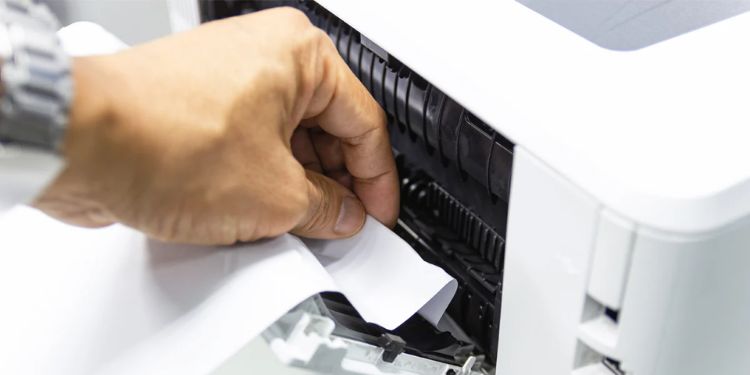
Paper Jam
The paper jam issue is a common printing condition that occurs when paper does not move smoothly through the printer’s internal path. This issue may stop printing suddenly and display alert messages on the printer or connected device. Paper jams can happen during single-page or multiple-page printing tasks.
Common Situations Leading to Paper Jams
Paper jams often occur when sheets are not aligned properly in the tray. Overloading the paper tray or mixing different paper sizes may increase the chances of paper getting stuck. Environmental factors such as humidity can also affect how paper behaves inside the printer.
Paper Quality and Storage Effects
The type and condition of paper play an important role in paper movement. Bent, wrinkled, or damp sheets may not feed correctly. Paper stored in open or humid spaces can absorb moisture, causing sheets to stick together and interrupt smooth feeding.
Internal Roller Wear and Movement
Printers rely on internal rollers to pull paper through different sections. Over time, these rollers may lose grip due to regular use. Reduced traction can cause paper to move unevenly or stop partway through the printing process.
Multiple Sheet Feeding Problems
In some cases, the printer may pull more than one sheet at a time. This can lead to overlapping pages and sudden stoppage. Multiple-sheet feeding often occurs when paper edges stick together or when trays are filled beyond recommended limits.
Paper Path Obstructions
Small objects such as torn paper pieces or dust buildup inside the printer can obstruct the paper path. Even minor obstructions can cause repeated paper jam alerts. Regular usage without internal cleaning may gradually increase the likelihood of such blockages.
Incorrect Paper Size Selection
Paper jam issues may also appear when the selected paper size does not match the paper loaded in the tray. This mismatch can cause the printer to expect different dimensions, leading to alignment issues and interrupted paper movement.
Frequent Jam Alerts During Large Print Jobs
Long or high-volume print tasks can increase the chance of paper jams. Continuous printing generates heat, which may slightly alter paper texture. This can make paper less flexible, resulting in feeding inconsistencies over extended printing sessions.
Impact on Printing Workflow
Paper jam issues can disrupt daily printing routines and slow down document processing. Repeated interruptions may cause frustration, especially in busy office environments. Understanding common paper movement challenges can help users anticipate such occurrences.
Conclusion
The paper jam issue can stem from paper condition, feeding behavior, or internal printer movement. By recognizing the situations that commonly lead to paper jams, users can better understand printer performance. Awareness of these factors allows smoother handling of everyday printing tasks.